


Hello everyone,
The plight of Myanmar’s primarily Muslim Rohingya minority is, even by the standards of the material we cover in Proximities, severely under-reported.
More than one million members of the community are crammed into refugee camps in Bangladesh where they live in appalling conditions. Those who remain in Myanmar mostly live in Rakhine State, which, with Myanmar in the grip of a civil war, is controlled by one of the country’s many rebel groups.
They regularly try to escape, fleeing destitution in Bangladesh or war in Myanmar, risking their lives in rickety boats, often attempting to reach Muslim-majority Malaysia, where they believe they will be accepted but where they face growing discrimination. Some of the refugees also head for Indonesia.
It’s a bleak situation that deserves more attention.
A Q&A below.
Bests,
Barry
Episode 8 of the Proximities Podcast is now live on Apple Podcasts, Spotify and YouTube.
How have a million Rohingya people ended up in Bangladesh?
Though the Rohingya had been persecuted for years, this crisis began in late 2016 when Myanmar’s military launched a massive assault against the group.
It’s hard to overstate how horrible it was.
Using the pretext of attacks by a newly formed Rohingya armed group on army posts along the Bangladesh-Myanmar border in October 2016, during which nine border officers and four police were killed, Myanmar’s military, the Tatmadaw, unleashed hell on civilians. I call it a pretext because the response was wildly disproportionate, and according to a Reuters investigation, a plan for purging the Rohingya had been drawn up by the Tatmadaw three years earlier.
In just the first two weeks, more than 75,000 Rohingya fled into Bangladesh.
But the campaign against the Rohingya escalated sharply in August 2017.
Attack helicopters fired on villages, unarmed civilians were summarily executed, entire settlements were burned to the ground and countless women were raped.
The onslaught did exactly what most people believe it was intended to do: send Rohingya people fleeing into Bangladesh. A staggering 750,000 crossed the border.
Now there are more than one million, according to the U.N. refugee agency.
The Tatmadaw, coldly and clinically, called it a “clearance” operation.
In 2018, a U.N. fact-finding mission published a report in which it concluded that genocide, crimes against humanity and war crimes had taken place.
And in January, the International Court of Justice, the U.N.’s highest court, began hearings in a genocide case against the government of Myanmar brought by Gambia on behalf of several other Muslim nations.
The camps must be huge
They are. The biggest in the world, in fact.
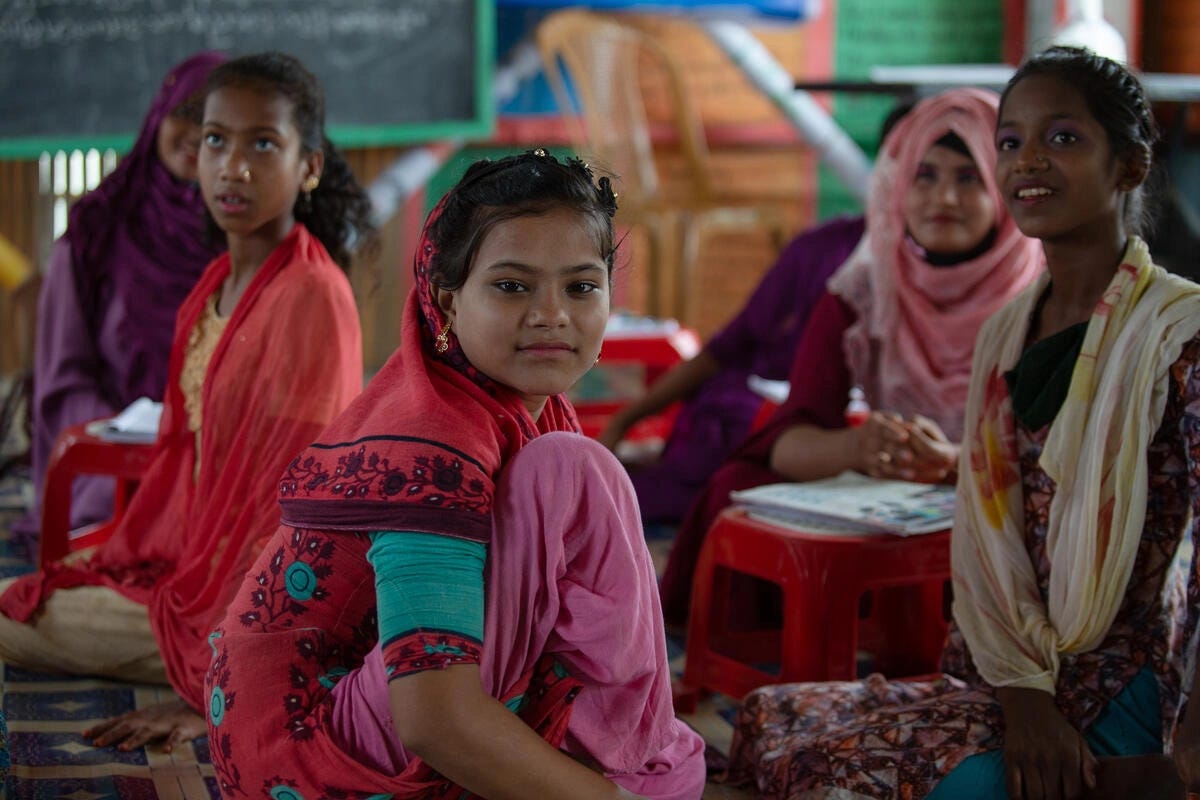
They’re overcrowded and living conditions are atrocious. And, almost a decade on from 2017, those conditions are deteriorating, not improving.
