


You know the picture. Everybody does.
A naked girl is running down a road, her hands and arms extended outward from her sides as if they have been tainted, as if she doesn’t want them to touch her body, as if she is afraid of contact with herself. Her face, as much as her lack of clothes, is why we remember. She is in pain, that’s clear. She is screaming, looking directly into the camera and, for the viewer, for us, it’s almost like she is demanding that we help. It’s like she is demanding we do something.
Of course, the girl, who we now know was named Phan Thị Kim Phúc, wasn’t asking for any of that. She was just a frightened child. But what we read into such images, what they make us feel and what they make us do, is important.
Because what is journalism for if not for making us angry?
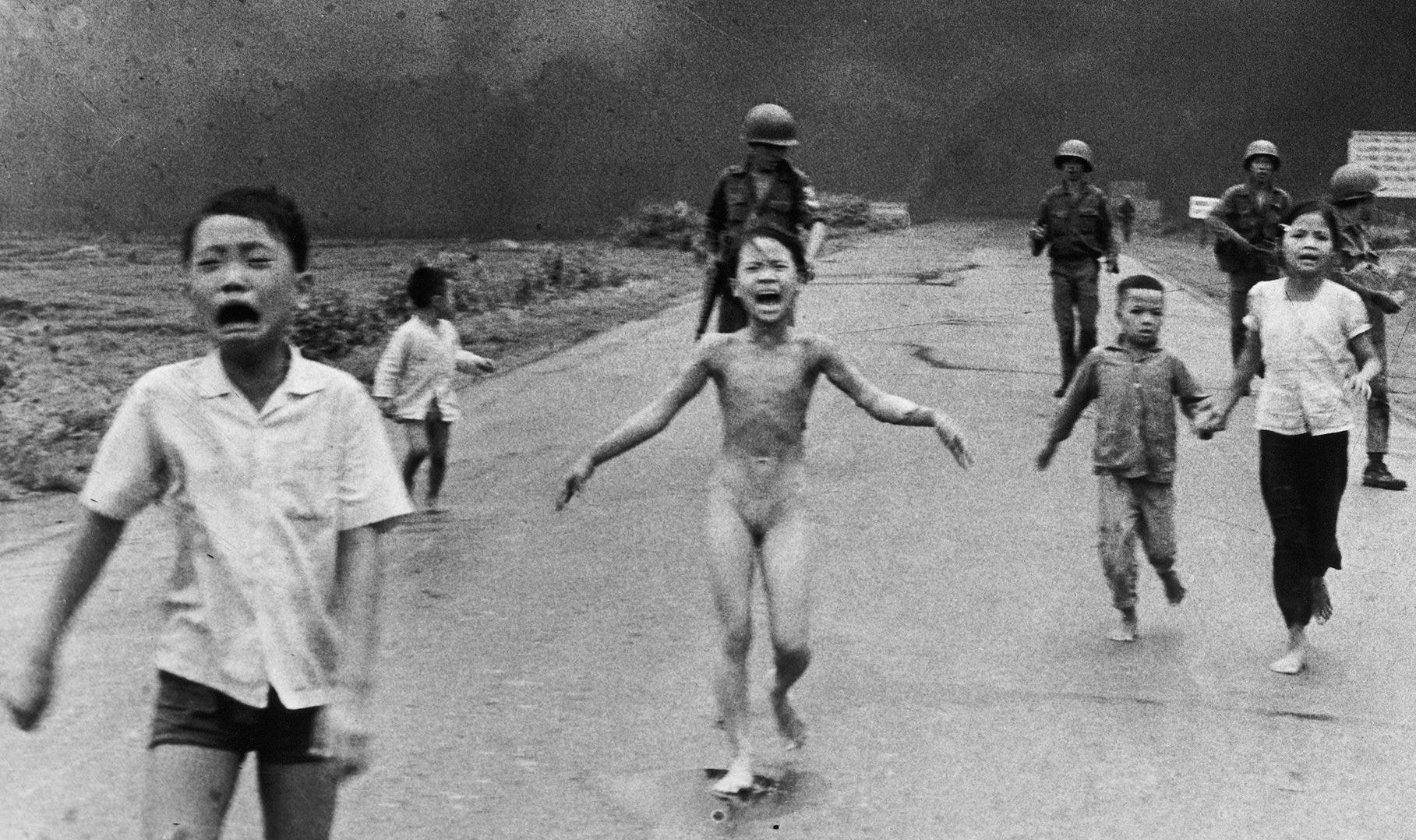
The nine-year-old, who had been severely burned in a napalm bombing in Vietnam, became widely known as “Napalm Girl” and the photo, which the Associated Press named “The Terror of War,” was splashed on newspaper front pages all across the United States at a time when publishing a photograph of someone naked was a particularly contentious thing for the media to do.
By 1972, when the image was taken, public opinion in the U.S. had already begun to turn against the Vietnam War, but its power still made it one of the most consequential news photos in history as it became a galvanizing symbol for the anti-war movement. Its importance was so potentially significant that President Richard Nixon was captured on tape wondering if it had been staged.
Nixon knew that whatever their politics, an image like this could change people’s minds. He knew that little girl could provoke rage.
Last week, a photograph of another child caught people’s attention.
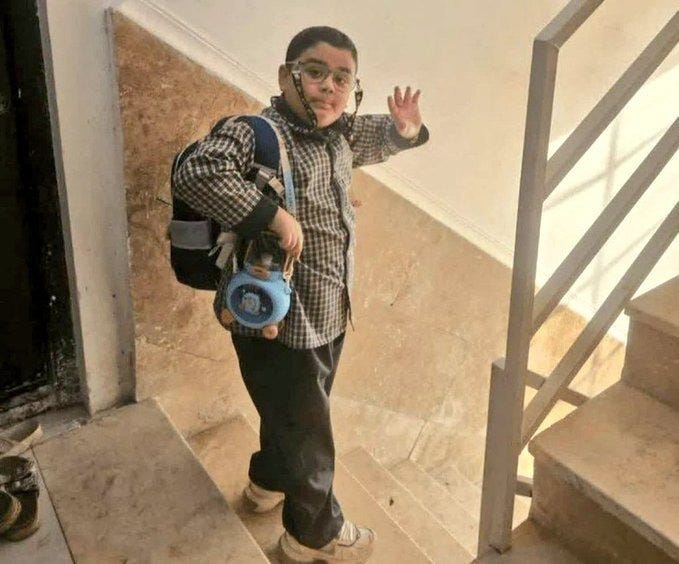
In a way, it’s mundane given that millions of people all over the world have taken exactly the same picture of their own children. But that is its power and that is what broke people’s hearts as it spread quickly across social media.
The boy, named as Mikaeil Mirdoraghi, was waving goodbye to his mother as she took a photograph of him on his way to school. It would be the last time they saw each other as Mikaeil, it is said, was killed when the U.S. bombed the Shajareh Tayyebeh school in southern Iran, killing up to 175 people, according to authorities, the majority of them seven to 12-year-old girls. Though the school was primarily for girls, boys were educated there also.
It’s the details in the image that get you.
The morning sun illuminating the stairs, Mikaeil’s shirt and trousers as he is sent out into the world well presented, the clunky shoes whose laces his mother may have tied, and what appears to be a water bottle with a cartoon on the front.
And there’s the glasses, the slightly awkward glasses, with a strap attached to make sure he doesn’t lose them. I wonder had he lost them before.
Only a still image allows us to take all of that in. To pore over it and ponder it until we see ourselves, until we see people we know, until we see our own children, and until we can imagine being someone else, somewhere else.
There have been other such images of children.
Famed photographer Don McCullin’s 1962 shot of a malnourished and skeletal woman in Biafra struggling to breastfeed her starving baby. Kevin Carter's forever haunting photo of an emaciated Sudanese boy on the verge of death as a vulture waited nearby. The sight of five-year-old Omran Daqneesh, sitting confused in the back of an ambulance in Syria, dusty and bloodied.
In 2015, the body of another Syrian boy, three-year-old Alan Kurdi, washed up on a beach in Turkey as his family tried to flee war. Again, it was the details. The way his body lay reminded people of the way their children slept in bed at night, unlike Alan, safe. There were the little shorts and the shoes with velcro fasteners.
I vividly remember seeing the image for the first time and noticing how alone he was, how he had been taken from his parents by a merciless current, not only of water, but of war, the type that sweeps people from their countries.
The photo, taken by Turkish photographer Nilufer Demir, had an overnight impact as it was not only shared on social platforms but picked up by major media organizations and splashed on screens and in print across the world.
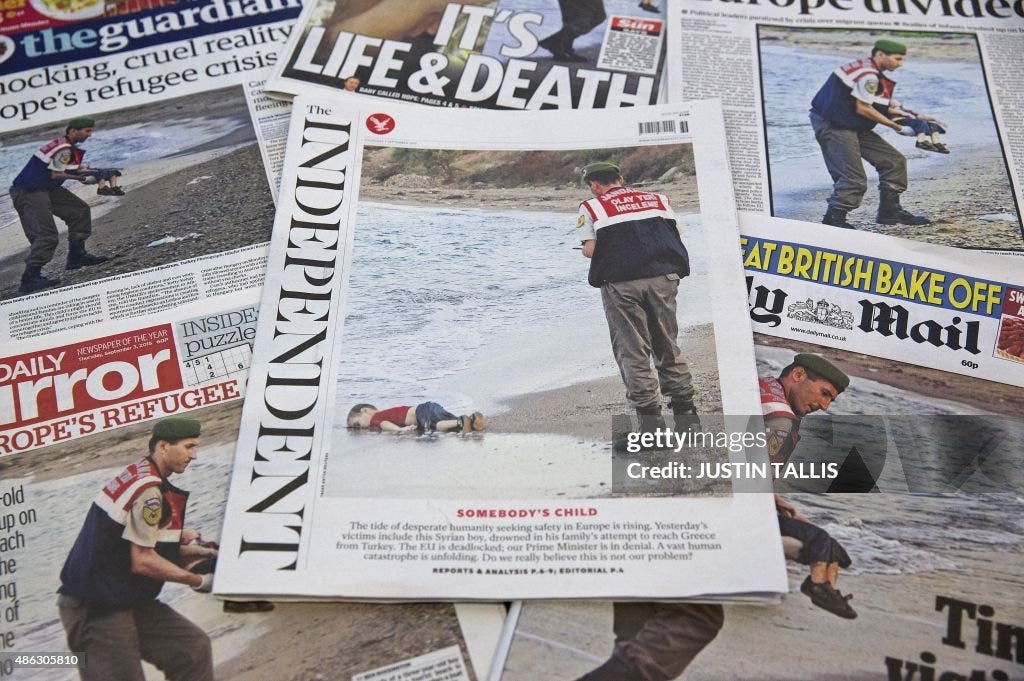
In the wake of its publication, polls showed sympathy for refugees soaring. Even many who were previously hostile to immigration said that Syrians should be welcomed. There was a spike in donations to refugee charities, with the Migrant Offshore Aid Station reporting a 15-fold increase in just 24 hours.
"As a father I felt deeply moved," Britain’s Prime Minister David Cameron said, and under pressure from the public, pledged to allow 4,000 Syrian refugees a year enter the UK until 2020. Germany admitted thousands of people who had been stranded in Hungary. When it became apparent that the Kurdi family had been trying to reach Canada, refugees became a major issue in the country’s federal election race, and Ottawa agreed to take in 25,000 Syrians.
And, most significantly, the European Union struck a deal to impose quotas that would share responsibility for some of the people arriving in Italy and Greece.
Though governments later cynically undid many of the decisions made during that moment of global compassion, the image of Alan on the beach left a lasting legacy of grassroots refugee rights organizing.
Like Napalm Girl, it changed opinions, and for a time, it changed policy.
More than 10 years after his death, and almost two and a half years into Israel’s ongoing destruction of Gaza, I often wonder why we haven’t had a Palestinian Alan Kurdi or Napalm Girl, even as the children of Gaza are slaughtered in front of our eyes, the before and after of their precious faces and mangled bodies flitting past our screens between ads for skincare products.
It’s not for a want of awful material. More than 70,000 people have been killed in Gaza since Oct. 7, 2023, according to health ministry figures, more than 17,000 of them children, with most experts believing the figure to be an undercount.
Three-year-old Reem Nabhan, killed by an Israeli missile as she slept in bed alongside her five-year-old brother Tarek, immediately comes to mind. The heartbreak of her devoted grandfather, Khaled, led to several photos of the inseparable pair going viral. “She was the soul of my soul,” Khaled, who would himself be killed by Israeli tank fire a year later, said.
Her favourite game? Pulling his beard.
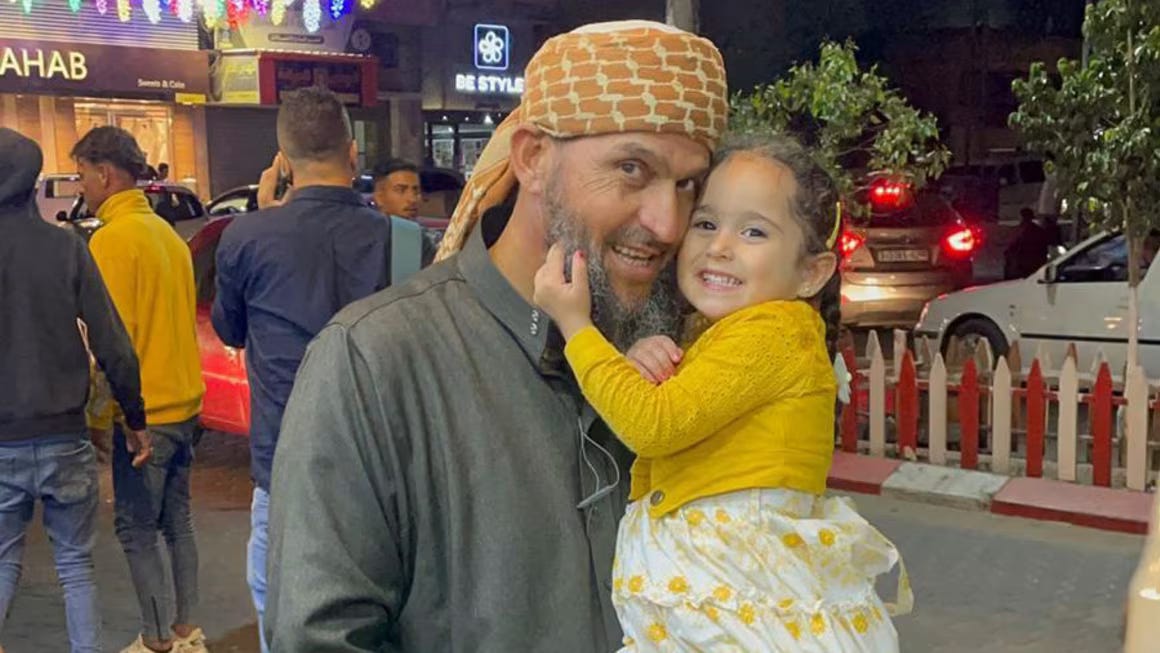
If Reem couldn’t change minds, then why not Saly Abu Maamar? Or 17-day-old al-Amira Aisha – “Princess Aisha”? Or Nour Abu al-Qumssan?
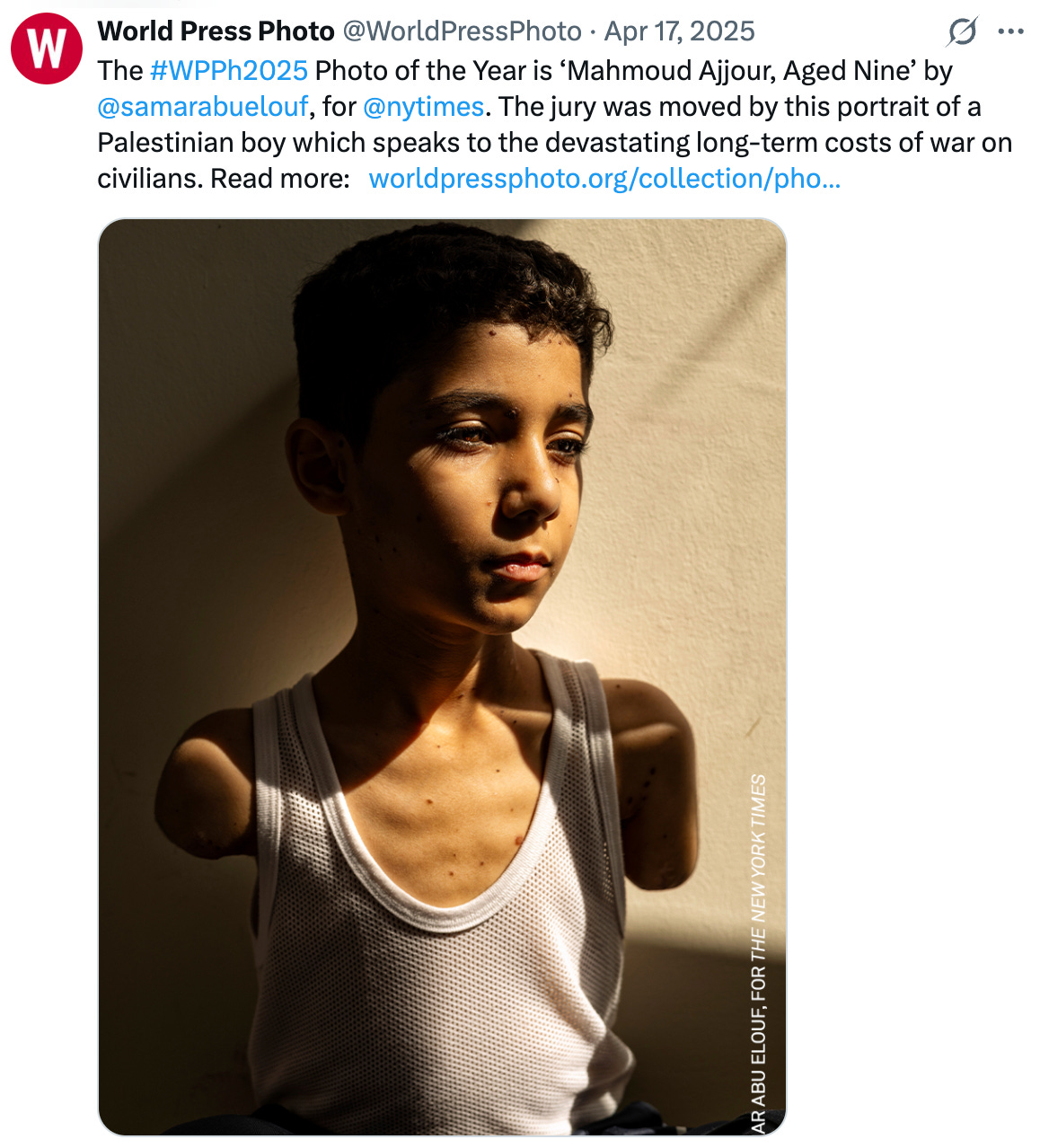
Samar Abu Elouf’s portrait of 9-year-old Mahmoud Ajjour, who lost both of his arms in an Israeli assault, won the prestigious World Press Photo prize last year, but despite that recognition, it failed to achieve widespread attention.
Even the nightmarish death of Hind Rajab, killed in a hail of bullets by Israeli soldiers while trapped in a car surrounded by the bodies of dead family members, though the most widely known killing of a child in Gaza, did not move the dial.
The images of Kim Phúc and Alan achieved something those of Reem, Saly, Aisha, Nour, Mahmoud – and Mikaeil in Iran last week – did not.
They broke through. People who did not usually follow the news saw the children and learned their names. They were discussed in workplaces and bars and around dining room tables. Their stories became part of the national conversation.
This does not happen for Palestinian children because, through the nature of its coverage, the mainstream international media devalues their lives. Victims of U.S. and Israeli bombs and bullets are not humanized in the way that other victims are. If more than 170 people, most of them children, were killed in an Iranian attack on a school in Israel, it would lead the news for months. We would know who they were, we would see their photos, we would hear from their parents, we would learn of their hobbies and their hopes and their friendships.
The outpouring for Mikaeil and his mother was restricted to social media, to bubbles where only the already sympathetic and engaged would see it. In major media outlets, the Iranian children were buried deep in the middle pages of newspapers, at the tail end of bulletins, and when their killings were reported, it was most often as mere numbers against a backdrop of U.S.-Israeli denials.
But they are not just figures on a spreadsheet, and they are still being slaughtered in Iran, Gaza and Lebanon.
More have been killed in the week since the Shajareh Tayyebeh school bombing, more will be killed this week, and more will be killed the week after that.
None of them will make the front pages.
On of the most engaging articles I’ve read in a long time.
Thank you Barry.